How I designed, shipped, and iterated an AI assessment that 2,000+ college students used to practice interviews, sold through universities and adopted through student clubs.
01The problem
Students practiced interviews and got a vague verdict, or nothing at all. Career centers could not give every student a live mock interview. Employers could not see skill signals early enough.
[Your sharpest one-sentence version of the problem, with a number if you have one.]
02Discovery: three customers, one product
- Buyer, the university: needs outcomes to report and a tool that scales past staff capacity.
- Practitioner, career programs and student clubs: need something students will actually use, and a view of who needs help.
- Learner, the student: needs honest, specific feedback and a clear next thing to practice.
Same shape as K–12: district buys, teacher runs it, student takes it. [What you learned from [#] discovery conversations, and the one insight that changed the roadmap.]
I also host How I Got This Job, a podcast where I talk with students, scholars and career services leaders, the same people this product serves. [One line on Dr. Ansley Booker's career services role.] [Episode link]
03Designing the assessment
What exactly are we assessing?
[Decision, and why.]
What does a strong response look like?
[Decision, and why.]
How does the rubric turn performance into a useful result?
[Decision, and why.]
How do we keep results trustworthy and hard to game?
[Decision, and why.]
How does feedback help someone improve, not just score?
[Decision, and why.]
04Where AI belongs in the workflow
[How you validated AI scoring before broad release: agreement with human graders on [#] responses, the threshold you set, and what happened below it.]
05Technical decisions
[The API and backend choices you owned with engineering: how assessments, responses, and scores are stored and served; integrations; one tradeoff you made and why.]
06Launch and distribution
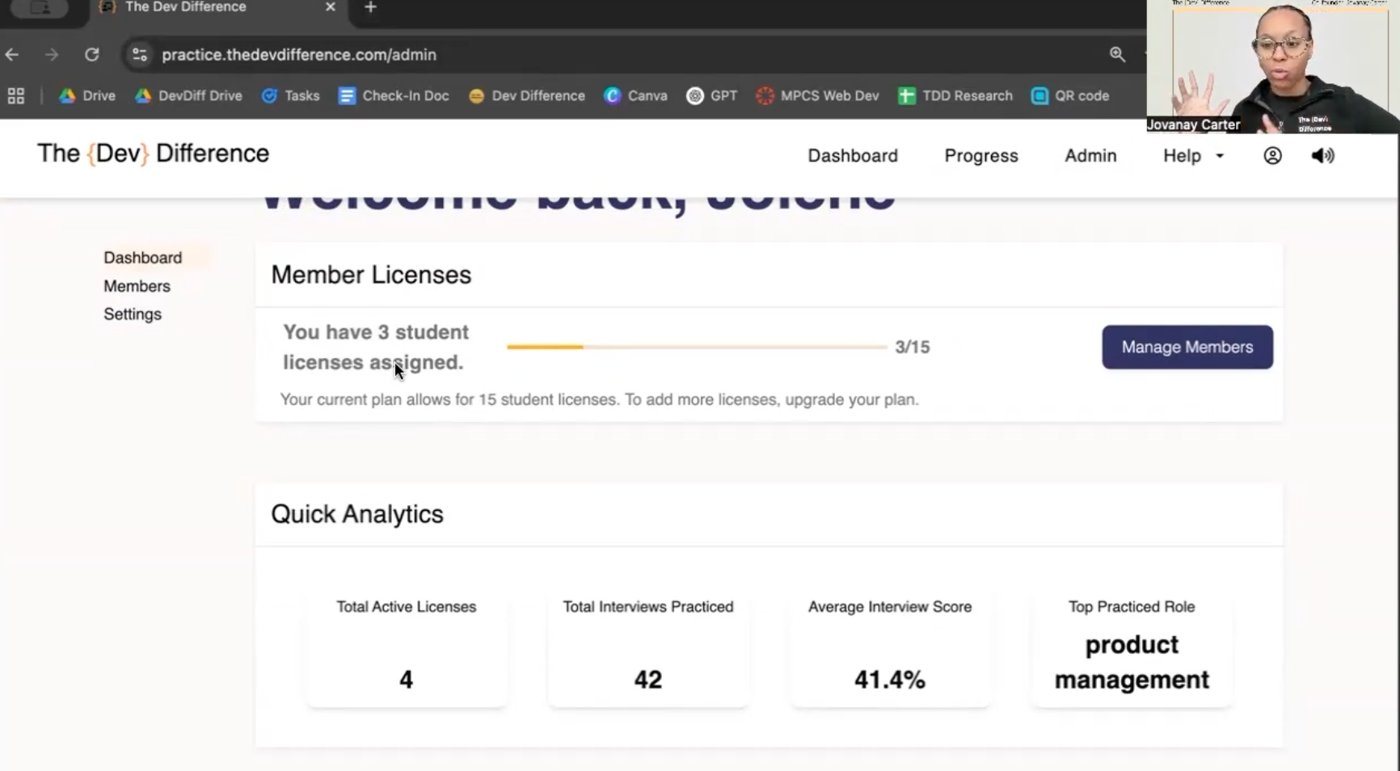
Partnered with universities for access, then went straight to student clubs to drive real use. [How the first launch went and what you changed in the first 30 days.]
07Measuring it, then changing course
What the data told me
[One insight that surprised you.]
What I changed
[The pivot or iteration, and the result after.]
08What this means for K–12
Different setting, same problem: help a teacher see how a student is thinking, and what to teach tomorrow.